
Shape Coding: A Visual Approach to Supporting Grammar
Shape Coding is a highly effective, visual system used in speech and language therapy to support the understanding and use of grammar. It was originally developed by Susan Ebbels and is widely used with children and young people who experience difficulties with expressive or receptive language.
At its core, Shape Coding uses colours, shapes, and visual cues to represent different parts of a sentence. This helps make abstract grammatical rules more concrete and accessible.
Why Shape Coding Works
Grammar can be difficult because it’s often invisible—you can’t “see” sentence structure. Shape Coding changes that. Instead of relying only on spoken explanations, it:
- Makes sentence structure visible
- Breaks language into clear, manageable parts
- Supports processing and memory
- Encourages independent sentence building
This approach is particularly helpful for children with:
- Developmental Language Disorder (DLD)
- Autism
- Speech, language and communication needs
- Literacy difficulties
How Shape Coding Represents Language
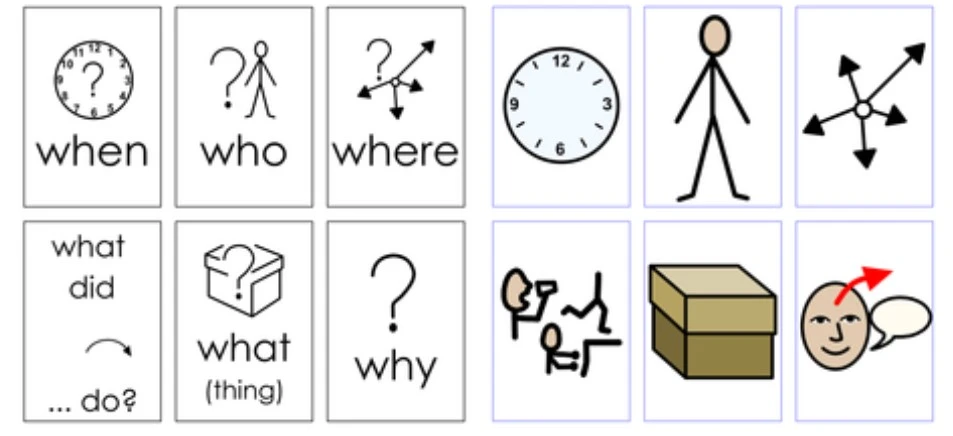
Each part of a sentence is represented visually. For example:
- Who (subject) → often shown as a specific shape (e.g. oval)
- What doing (verb) → another shape (e.g. rectangle)
- What (object) → different shape
- Where / When → additional shapes
Colours are also used to highlight grammatical features such as:
- Verb tense (past, present, future)
- Plurals
- Pronouns
- Connectives
These consistent visual cues help learners recognise patterns and apply rules across different contexts.
What Does a Session Look Like?
Shape Coding can be used flexibly in both 1:1 therapy and group settings. A typical session might include:
- Building simple sentences using shapes
- Expanding sentences (e.g. adding adjectives or clauses)
- Practising verb tenses visually
- Correcting sentences together using visual prompts
- Linking spoken language to written work
At Talkbox Children’s Clinic, we use Shape Coding as part of our therapy to support children in developing their understanding and use of grammar in a clear,
structured, and engaging way. It is integrated into both individual sessions and group work, depending on each child’s needs. Over time, the visual supports are gradually reduced as confidence and independence increase.
A Neuro-Affirming Perspective
Shape Coding fits well within a neuro-affirming approach. Rather than expecting children to “pick up” grammar intuitively, it provides explicit, accessible tools that support different learning styles.
It:
- Respects that not all learners process language in the same way
- Reduces frustration by making expectations clear
- Builds confidence through success and understanding
- Supports autonomy and self-expression
The goal is not to make communication “perfect,” but to give individuals the tools they need to communicate effectively and authentically.
Supporting Shape Coding at Home or School
Parents and educators can support this approach by:
- Using consistent visual symbols
- Modelling sentence structures
- Encouraging children to build and edit sentences
- Linking spoken and written language
Even simple adaptations—like colour coding parts of a sentence—can make a big difference.